Our Approach to Conducting Competitor Research for Website Design, Development & Branding

Most companies approach competitor research like a passive observer checking out what others are doing, taking a few notes, and maybe adjusting their own strategy accordingly. But here’s the truth: that’s a defensive approach. It keeps you playing catch-up, ensuring you’ll always be a step behind.
We take a different approach.
For us, competitor research isn’t just about gathering information it’s about understanding, dissecting, and using insights as a weapon to craft an unshakable market position. It’s about spotting gaps, outmaneuvering competitors, and making sure our clients aren’t just another option but the only obvious choice.
So how do we do it?
Let’s break it down.
1. Competitor Identification: Understanding Who (and What) You’re Up Against
Before we dive into competitor analysis, we redefine what a competitor actually is. Because most companies look at only the obvious players the ones offering the same product or service and that’s a huge mistake.
We categorize competitors into three levels:
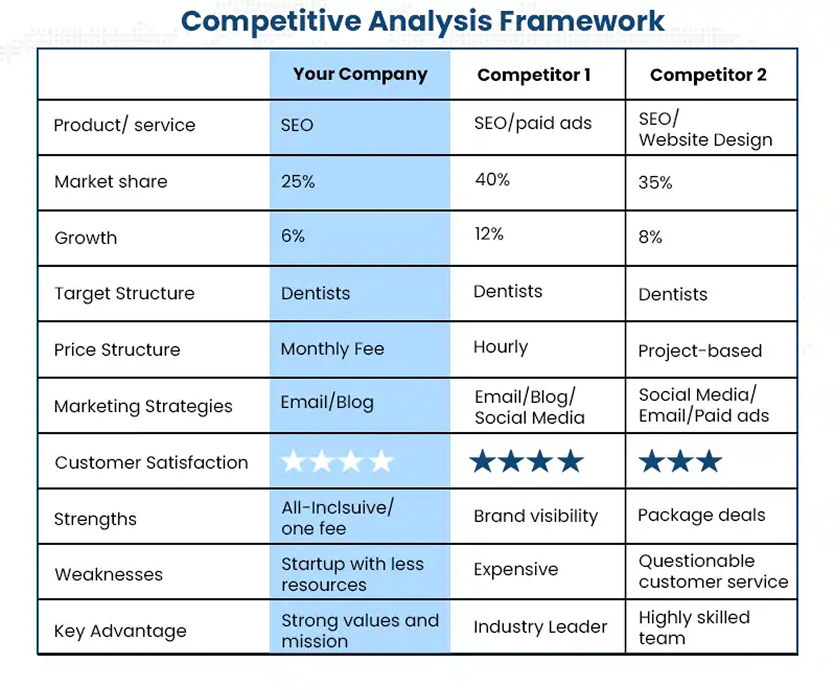
Take the website development industry as an example. If you're a custom web development agency, your direct competitors are other agencies. But your real indirect competition could be DIY website builders like Wix, Webflow, or Squarespace. They’re not selling the same service, but they’re pulling customers away who might otherwise have hired a developer.
And aspirational competitors? That could be Apple or Tesla. They’re not in web development, but their brand storytelling, design philosophy, and customer experience set a bar that customers now expect from every brand they engage with including yours.
When you only look at direct competitors, you’re missing the full picture. The real question isn’t “Who else does what we do?” but “Who else is competing for our customers’ attention?”
2. Design Analysis: Are They Setting Trends or Playing It Safe?
A website isn’t just a digital storefront it’s a first impression, a sales pitch, and a trust signal rolled into one. But great design isn’t about aesthetics alone; it’s about seamless user flow and conversion-driven strategy.
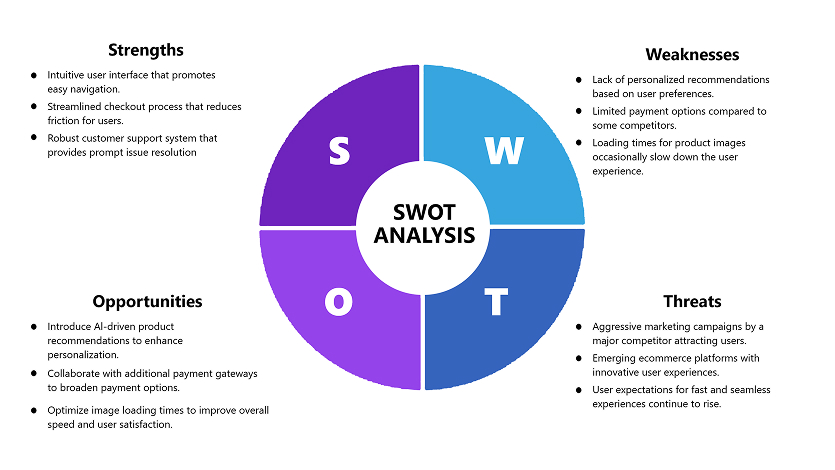
We run a SWOT analysis on competitor websites, breaking down visual appeal, user experience (UX), and accessibility.
Example SWOT Analysis of a Competitor
At the end of the day, competitor research isn’t about imitation it’s about taking what works, fixing what doesn’t, and making sure our clients don’t just compete, but lead.
3. Development Analysis: Strength or Weakness?
A slow, poorly built website is an invisible business killer. Users won’t sit around and wait for a site to load. Neither will Google.
That’s why we don’t just analyze how a site looks we look at how it performs.
We examine:
For example, if a competitor is still using an outdated CMS with bloated code, their page speed will suffer which means lost traffic, lower rankings, and frustrated users. That’s an opportunity.
If they’re dominating SEO rankings, we analyze exactly why they’re winning and how we can overtake them. If they’re ignoring accessibility, we ensure our client’s website is inclusive and fully compliant.
The real takeaway? A great website isn’t just beautiful it’s fast, flexible, and built to scale.
4. Branding & Messaging: Are They Truly Distinct, or Just Another Option?
A strong brand isn’t built on color palettes and fonts it’s built on perception. Branding is how a company positions itself in the market and speaks to its audience.
Most brands fail because their messaging is vague and interchangeable.
We analyze:
Look at Apple vs. Dell.
Apple’s brand message is sleek, aspirational, and customer-driven: “Think Different.” Dell? More technical, feature-focused: “Powerful, reliable computers.”
Apple is selling a vision. Dell is selling a product.
And that difference is everything.
When we analyze competitors' branding, we don’t just look at their messaging. We break down its impact and we craft positioning that makes our clients the most compelling choice in the market.
5. Benchmarking: How Do We Measure Up?
We don’t guess how we stack up against competitors we measure it. Using tools like SEMrush, SimilarWeb, and Ahrefs, we dig into traffic volumes, keyword rankings, and backlink profiles to get a clear picture of who’s winning and why.
Traffic data tells us who’s getting attention and when. Are they riding a seasonal surge, or are they consistently pulling in visitors? More importantly, what keywords are driving their traffic? If they’re ranking for high-value search terms we haven’t tapped into yet, we fix that fast.
Backlink analysis reveals where their authority comes from. Who’s linking to them, and more importantly, why aren’t they linking to us instead? By identifying these opportunities, we don’t just close the gap we build a stronger, more strategic link profile that improves SEO performance and brand visibility.
This isn’t about keeping up. It’s about knowing exactly where to strike to take the lead.
6. User Insights: The Real Story Behind Competitor Success (or Failure)
Real insights come from real users. We analyze competitor reviews, testimonials, and social media engagement to uncover what customers actually think.
By diving into reviews on Google, Trustpilot, and industry-specific platforms, we spot patterns: What do customers love? What frustrates them? Where do competitors consistently fall short? These gaps aren’t just problems they’re opportunities waiting to be capitalized on.
Social media tells us even more. How do competitors interact with their audience? What content sparks conversation? Where are they failing to engage? A brand that just posts and prays isn’t the same as one that builds a loyal community.
By analyzing both praise and complaints, we don’t just get a snapshot of the user experience we get a roadmap for doing it better. Because if competitors are leaving pain points unaddressed, we’ll be the ones to solve them. And that’s how you win market share.
7. Turning Insights Into Strategy: Where We Win
Once we’ve analyzed every aspect of the competition, we go deeper, identifying strengths, gaps, and opportunities for differentiation.
We break it down: Where are competitors excelling? Is it UX, performance, branding? More importantly, where are they weak? If they’re missing key features, struggling with engagement, or failing to deliver compelling content, we don’t just take note we take action.
This isn’t about playing catch-up; it’s about carving out a position so strong that competitors start adjusting to us. By honing in on key differentiators and unmet market needs, we create a strategy that doesn’t just make our brand competitive it makes it the obvious choice.
Stop reacting start leading. Let’s turn competitor insights into a strategy that makes your brand the one to beat. Get in touch today.